When Underwriters Model the Forest: Wildfire Risk and the Repricing of Timberland
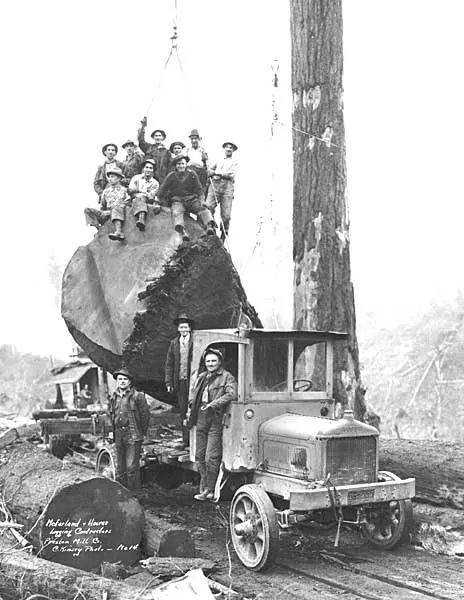
Photo: Listz3, Public domain, via Wikimedia Commons
Property underwriters have spent the past several years rebuilding their view of the American forest. The result is not a single rate increase but a structural change in how timberland risk is priced. In 2026, renewals are being shaped by wildfire models that evaluate slope, fuel load, canopy structure, access, water availability, and suppression response at a resolution that most policyholders cannot see and many cannot document.
For US timberland owners, the practical consequence is that insurance is no longer a back-office renewal. It is an enterprise risk input that affects debt covenants, harvest scheduling, and the valuation of standing timber. The underwriter's model has become a counterparty in the ownership structure.
The Premium Reset Is Not Uniform
The repricing is not a blanket increase across every acre. Insurers are segmenting portfolios more aggressively, and the spread between well-documented, lower-risk properties and poorly documented, higher-risk properties is widening. A timberland owner in the Pacific Northwest may face a different underwriting conversation than an owner in the South or the Lake States, but the common thread is granularity. Carriers want to know not just where the timber is, but how the forest is arranged, how a fire would move, and what the owner has done to change the outcome.
Deductibles are moving in the same direction. Percentage deductibles tied to insured value, separate wildfire sublimits, and coinsurance requirements are becoming more common. For large ownerships, the result can be a coverage structure that looks affordable on premium but exposes the owner to significant retained loss.
What the Models Are Looking For
Modern wildfire models are less interested in averages than in pathways. They evaluate how fuel connects across a landscape, how slope and wind align, and whether roads, streams, or treated stands interrupt fire behavior. They also consider response access: whether a fire crew can reach a stand, where water is available, and whether evacuation or suppression priorities are likely to compete with forest protection.
That is why a timberland owner can be penalized for conditions that were never part of a traditional insurance submission. A dense, unthinned stand near a wildland-urban interface may carry a different risk load than a managed stand with recent fuel reduction. A property with a single access road and no water source may be treated differently from one with multiple entry points and documented emergency plans.
Documentation Becomes a Risk Control
The most important shift for operators is that underwriting now rewards evidence. A fuel-treatment prescription that exists only in a management plan is less persuasive than a GIS record showing completed units, treatment dates, and follow-up. A defensible-space standard is less persuasive than photographs, inspection notes, and maintenance schedules.
US timberland owners should consider building an insurance file that parallels their operational records. It should include harvest and thinning history, prescribed fire or mechanical treatment records, road and access maps, water-source locations, emergency response contacts, and any cooperative agreements with local fire authorities. The file should be updated annually and presented with the renewal submission, not after a loss.
Where Parametric and Alternative Coverage Fit
Parametric coverage is drawing more attention because it pays on a defined trigger rather than an adjusted loss. For wildfire, triggers might include proximity to a defined fire perimeter, acreage burned within a grid, or a government declaration. Parametric structures can reduce claims friction and speed liquidity, but they are not a substitute for traditional coverage. Basis risk remains: a property can suffer damage without triggering the parameter, or trigger without matching the actual loss.
Alternative structures are also emerging in the form of captives, risk pools, and blended programs that retain frequency risk while transferring severity. These are not universal solutions. They require actuarial support, capital discipline, and a clear understanding of the owner's tolerance for retained loss. For larger enterprises, they can be part of a layered strategy. For smaller ownerships, the administrative cost may outweigh the benefit.
A Renewal Playbook for 2026
The first step is to start earlier. Wildfire underwriting is data-intensive, and carriers need time to review treatment records and access plans. The second is to separate the portfolio into risk tiers so that the owner can make deliberate decisions about where to retain risk and where to buy coverage. The third is to align the insurance strategy with the harvest plan: a stand scheduled for thinning in the next 24 months should be described as such, with a timeline and a budget.
The fourth step is to test the coverage against a realistic loss scenario, not just a premium budget. A lower premium with a percentage deductible and a wildfire sublimit may transfer less risk than it appears to. The fifth is to document the conversation. Underwriters change, models change, and the owner who can produce a clean risk file will have more options at renewal.
Wildfire underwriting is not a temporary cycle. It is a permanent change in how timberland risk is observed and priced. US timber enterprises that treat insurance as a management system rather than a procurement event will be better positioned to absorb the repricing and protect the asset base.