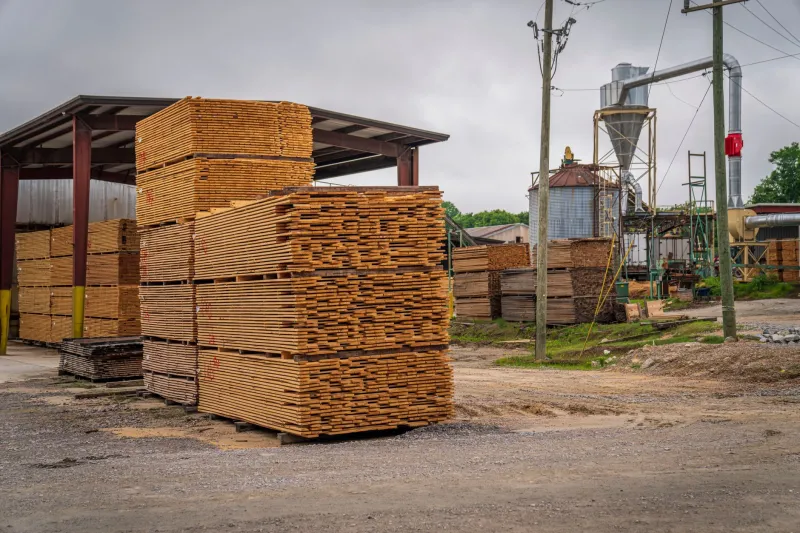
The Mass Timber Order Book Is Outrunning Mill Capability
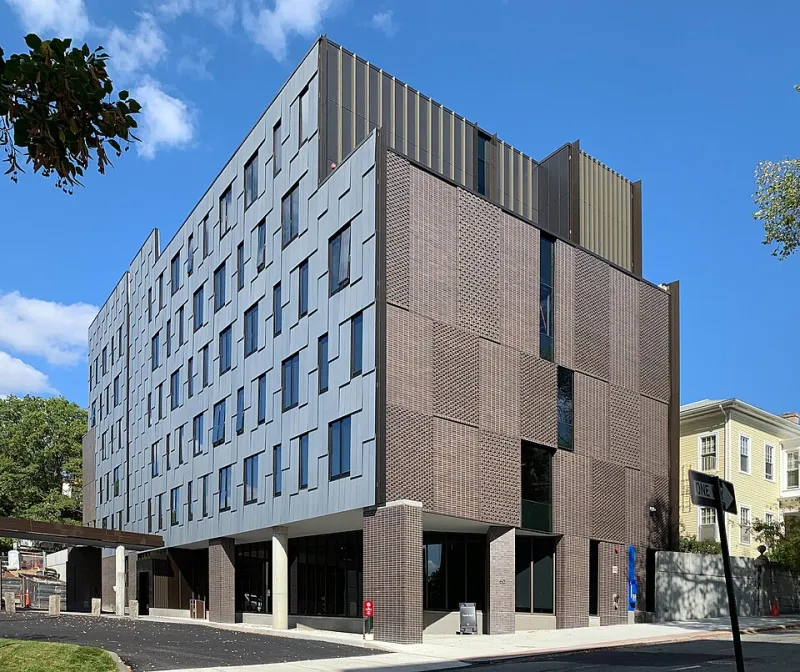
Photo: Kenneth C. Zirkel, CC BY-SA 4.0, via Wikimedia Commons
The mass timber conversation in the United States has moved past novelty. Building codes in a growing number of jurisdictions now recognize engineered wood as a mainstream structural system, and developers are specifying glued-laminated beams and cross-laminated timber panels in office, multifamily, and institutional projects. For sawmills, the relevant signal is not the press release; it is the order book. Structural wood is being specified earlier, and suppliers who can meet the specification are being selected earlier.
The harder reality is that demand for mass timber is not demand for a mill's current output. Mass timber products are exacting. They require species consistency, structural grading, controlled drying, and finishing tolerances that most commodity dimensional operations were never designed to deliver at scale. In 2026, the distance between a mill that sells boards and a mill that supplies a mass timber supply chain is a capital and capability gap, not a marketing one.
The Demand Signal Is Real, but Narrow
The US mass timber market is not a single market. It is a set of project-driven niches: mid-rise multifamily, higher-education buildings, civic structures, and a smaller number of tall wood projects that rely on code allowances and local fire officials willing to accept them. The 2024 International Building Code and its predecessors expanded the envelope for tall mass timber, but adoption remains jurisdiction-specific. A mill that hears "mass timber" and assumes a national commodity market will misread the opportunity.
What is growing is the number of projects where structural wood is specified early enough that the supplier becomes part of the design conversation. That favors mills that can produce consistent, certified material and support the documentation that architects, engineers, and general contractors need. It does not favor mills that can only quote a species and a dimension.
The Capability Gap: Species, Grading, Drying, and Finishing
Mass timber begins with a species decision. In the US South, southern yellow pine offers strength and availability, but it brings pitch, moisture variation, and grade consistency challenges. In the Pacific Northwest, Douglas fir and western species provide different structural and aesthetic profiles. Mills that have built their business on SPF or mixed hardwood runs may find that their fiber supply, sorting capability, and drying schedules do not align with what a CLT or glulam producer needs.
Grading is the next filter. Structural products require visual or mechanical grading with traceability. A mill that has not invested in grading discipline, piece tracking, and documentation will struggle to qualify as a supplier, even if its lumber is physically adequate. Drying is equally important. Mass timber tolerances are tight, and moisture variation that is tolerable in commodity framing can become a defect in a panel or a beam. Kiln capacity, schedule control, and moisture monitoring are not optional.
Finishing is where many otherwise capable mills fall short. Structural members may require planing, sanding, end matching, CNC cutting, or surface preparation. The equipment is capital-intensive, and the skill to run it is not interchangeable with conventional sawmill labor. A mill that cannot hold tolerance will not hold the order.
Where the Margin Actually Sits
The margin in mass timber is not in the board foot. It is in the specification, the fabrication, and the coordination. Mills that sell commodity lumber compete on price per thousand board feet. Suppliers that sell structural packages compete on reliability, documentation, engineering support, and delivery performance. That shifts the economics toward fabrication, project management, and logistics.
There is also a service layer that commodity mills rarely price: design-assist, sample production, certification support, and just-in-time delivery to a job site. These services carry cost, but they also carry pricing power. A mill that can help a developer de-risk a mass timber project is not selling a commodity. It is selling a schedule.
Capital Decisions That Cannot Wait
A credible mass timber capital plan starts with a capability audit, not an equipment wish list. The first question is whether the mill's fiber basket can support a structural product line at the required grade and consistency. The second is whether drying and finishing capacity can be brought into tolerance without starving existing customers. The third is whether the mill can document its process well enough to satisfy a structural supply chain.
From there, the capital priorities tend to fall into three buckets: grading and traceability, drying and moisture control, and finishing and fabrication. Each has a different payback profile. Grading and documentation investments are often lower-cost and faster to implement. Drying capacity is slower and more capital-intensive. Finishing equipment is the largest commitment and the one most exposed to project cyclicality.
Partnership Models Worth Considering
The mills that move fastest are not always the ones that build every capability in-house. Some are partnering with CLT manufacturers, glulam producers, or fabricators that already have the press, the CNC capacity, and the certification. The mill supplies qualified feedstock or semi-finished material and participates in a supply chain rather than trying to become the supply chain.
Other models include joint ventures with distributors, dedicated supply agreements with developers, and tolling arrangements with regional fabricators. Each carries trade-offs. Partnerships reduce capital exposure but can dilute margin and control. Vertical integration protects margin but concentrates risk in a single product line.
A 2026 Capital Filter
Before committing capital, US timber enterprises should test the opportunity against four filters. First, is there a repeatable project pipeline within a defensible freight radius? Second, can the mill meet the species, grade, and moisture specification without compromising existing operations? Third, does the capital plan preserve flexibility if construction demand softens? Fourth, is there a partner or customer willing to share the demand risk?
Mass timber is a genuine opportunity for US sawmills. It is not a rescue plan for commodity capacity. The mills that capture it will be the ones that treat it as a different business with different tolerances, different customers, and a different capital logic. The order book is already forming. The question is whether the mill's capital plan is forming with it.