Five Cracks in the Independent Logger Base — and a Procurement Playbook to Find Them First
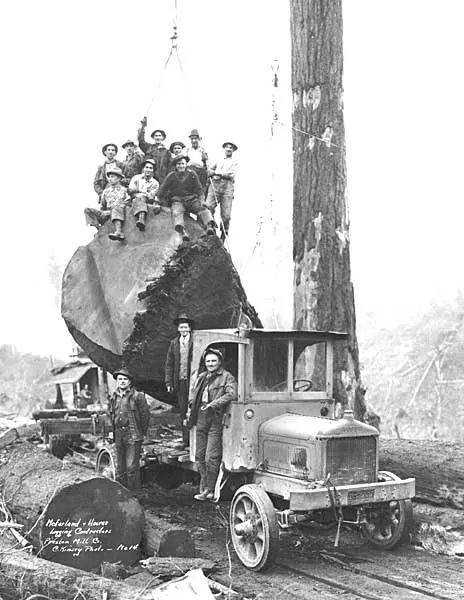
Photo: Clark Kinsey, Public domain, via Wikimedia Commons
Independent logging contractors are the load-bearing wall of the US timber supply chain. They fell, skid, and haul the raw material that becomes stumpage revenue for landowners and fiber for mills. Yet in most enterprise supply plans they appear as a line item, not as a capacity system with financial, equipment, and workforce risk. That abstraction holds until a contractor stops showing up.
The warning signs are usually visible months before a failure. They appear in maintenance logs, insurance certificates, payment conversations, and crew rosters. The problem is that procurement teams often treat those signals as contractor-specific issues rather than leading indicators of regional capacity risk. The following five signals are worth monitoring before they become harvest delays.
1. Maintenance Deferral and Parts Cannibalization
A contractor who is financially stressed will defer maintenance first. Equipment stays in the woods longer, repairs are pushed to weekends, and parts are pulled from one machine to keep another running. The visible symptom is a fleet that looks older than its stated hours, or a crew that spends more time troubleshooting than producing.
Procurement teams should not wait for a breakdown to ask about maintenance practices. A simple annual conversation about fleet age, major component hours, and dealer relationships can reveal whether a contractor is investing or surviving. If a contractor is cannibalizing equipment, the risk is not just downtime. It is a hidden liability that can surface as a safety event or a failed harvest commitment.
2. Insurance Certificates That Arrive Late or With Reduced Limits
Insurance is a proxy for financial health and operational discipline. A contractor who submits certificates late, changes carriers mid-term, or reduces limits may be responding to premium increases, claims history, or cash-flow pressure. In 2026, commercial auto and equipment coverage for logging operations remain expensive, and a contractor who is underinsured may be one incident away from insolvency.
Procurement should require current certificates at the start of each harvest season and verify that limits match the work being performed. A contractor with a lapse in workers' compensation or auto liability is not just a compliance problem. It is a supply-chain outage waiting to happen.
3. Payment Terms That Stretch Beyond the Contract
Cash flow in logging is relentless: fuel, parts, repairs, payroll, and equipment payments arrive before the next settlement. When a contractor begins asking for earlier payment, partial advances, or help with fuel costs, the underlying issue may be more than a temporary squeeze. It may be a structural gap between the contractor's cost base and the rate being paid.
Procurement teams should track payment behavior as a risk metric. A contractor who is consistently late in paying subcontractors or fuel suppliers is signaling a liquidity problem. So is a contractor who suddenly changes hauling patterns or reduces crew size without explanation. These are not reasons to terminate a relationship. They are reasons to have a direct conversation about capacity and terms.
4. Crew Turnover and an Aging Workforce
Logging is a skilled trade, and the labor pool is thin. A contractor who is losing operators, truck drivers, or mechanics is losing capacity. High turnover can also signal wage pressure, safety concerns, or a work environment that is not sustainable. An aging crew with no succession plan is a longer-term risk, but it can become acute if a key operator retires or is injured.
Procurement should ask contractors about crew tenure, training, and recruitment. A contractor who cannot name a successor for a lead operator is carrying concentration risk. A contractor who is training new operators is investing, but may also be running below full productivity. Both facts belong in the capacity plan.
5. Concentration and Backlog Mismatch
A contractor who depends on one mill or one landowner for most of its revenue is exposed to that customer's harvest schedule. A contractor who is overloaded with backlog may be borrowing capacity from future months. A contractor who is underloaded may be about to lose crews. The signal is not simply volume; it is the fit between committed work, equipment, and labor.
Procurement teams should map contractor concentration and backlog by season. If a key contractor is heavily dependent on a single customer, the enterprise should know what happens if that customer slows down. If a contractor is taking on work beyond its fleet capacity, the enterprise should know where the overflow will go. Capacity that looks available on paper may already be promised elsewhere.
A Procurement Playbook for Stabilizing Capacity
The first step is to treat contractors as capacity partners rather than transactional vendors. That means building a contractor map that includes fleet size, crew count, insurance status, financial indicators, and customer concentration. The map should be updated at least annually and reviewed before harvest planning, not after a shortfall.
Second, procurement should design contracts that support stability. Multi-year agreements with volume ranges, fuel surcharges tied to a published index, and prompt-payment terms can reduce the cash-flow shocks that push contractors toward failure. Advance payments or equipment-purchase partnerships carry risk, but they may be cheaper than lost harvest days.
Third, enterprises should invest in contractor resilience. Safety training, operator cross-training, and shared maintenance programs can improve productivity and reduce turnover. A contractor who can retain skilled operators is a more reliable supplier than one who is always hiring.
Fourth, procurement should maintain a contingency plan. That means identifying backup contractors, understanding their capacity, and being willing to pay a premium for standby availability. A contingency plan that exists only in a spreadsheet is not a plan.
The independent logger base is not a fixed resource. It is a network of small businesses with their own capital structures, labor challenges, and risk tolerances. US timber enterprises that monitor that network with the same discipline they apply to mill operations will be better able to keep fiber moving when the market tightens.