Where Have All the Foresters Gone? Confronting the Skilled Labor Shortage Threatening US Timber Operations
There is a version of the US timber industry's labor problem that looks like a staffing inconvenience — a few open positions, some difficulty filling seasonal roles, the ordinary friction of a competitive labor market. That version is not the one enterprise operators are actually living with. The reality is more structural, more persistent, and considerably more consequential for long-range operational planning.
Across the country, timber companies are watching the demographic clock run out on an experienced workforce that took decades to build. The foresters who know a given landscape intimately, the feller-buncher operators who can sustain production rates through difficult terrain, the kiln technicians who understand the mechanical idiosyncrasies of aging equipment — these individuals are retiring at a pace the industry is not remotely positioned to match with trained replacements. And the structural conditions that created this gap are not self-correcting.
The Demographic Reckoning
The Society of American Foresters has tracked a gradual but accelerating contraction in the professional forester population for over a decade. Enrollment in accredited forestry programs at US universities has declined as students migrate toward fields perceived as offering stronger compensation trajectories and clearer urban career pathways. The programs that remain are producing graduates, but not at the volume the industry requires — and a meaningful share of those graduates are absorbed by federal and state agencies, land trusts, and environmental consulting firms that compete directly with private timber enterprises for the same talent pool.
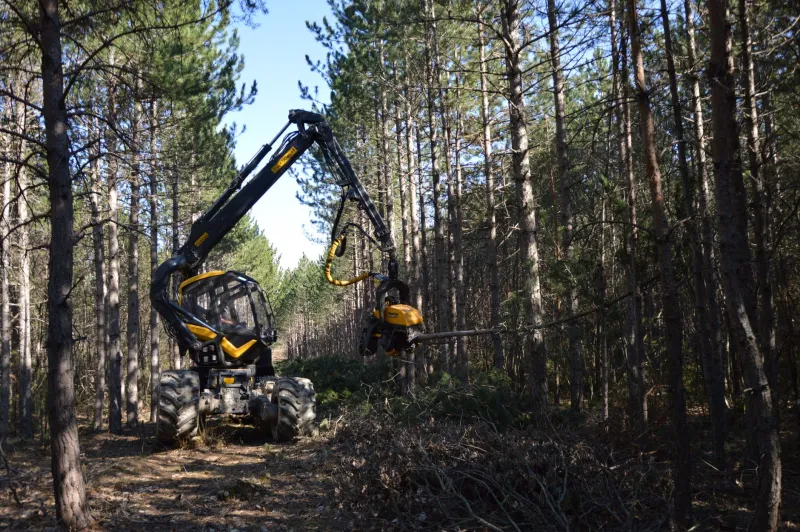
The equipment operator shortage is driven by a different but equally intractable dynamic. Modern harvesting equipment — tracked feller-bunchers, grapple skidders, cut-to-length processors — requires operators who combine mechanical aptitude with the spatial judgment and terrain awareness that only comes from years of field experience. That combination is not produced by general workforce training programs, and it cannot be accelerated simply by raising wages. The training pathway itself takes years, and the industry has underinvested in building and maintaining that pathway for a generation.
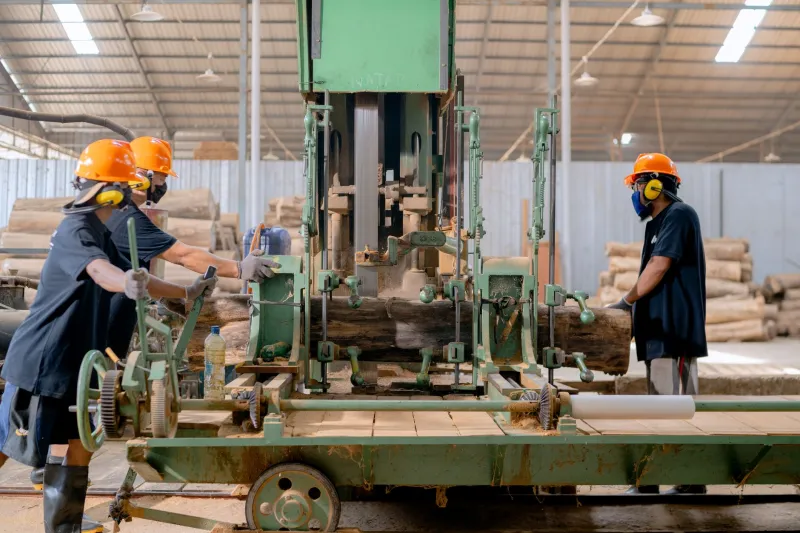
Mill-side, the challenge is compounded by the gradual sophistication of processing technology. Older millhands who understood their equipment through direct mechanical intuition are being replaced — incompletely — by a new generation of technicians who need to interface with programmable logic controllers, sensor arrays, and automated grading systems. The crossover skill set this requires is genuinely scarce, and community college technical programs have been slow to develop curriculum that reflects where the industry actually is today.
Why Wage Increases Alone Won't Solve This
The instinctive response to a labor shortage is to raise compensation, and in competitive regional labor markets — rural Oregon, the Southeast timber belt, the lake states — timber operators have been doing exactly that. Hourly wages for equipment operators have increased materially over the past five years, and signing bonuses that would have seemed extraordinary a decade ago are now routine in some markets.
But compensation increases, while necessary, address availability rather than supply. You can offer a competitive wage to a licensed forester or a certified mill technician, but if there are simply not enough trained individuals in the regional labor market, the primary effect is to redistribute the existing workforce rather than expand it. Operators who win the bidding war for scarce talent are often doing so at the direct expense of a competitor — a zero-sum outcome that leaves the industry's aggregate capacity unchanged.
Sustainable resolution requires interventions further upstream in the talent pipeline, and that means enterprise operators need to think of workforce development not as an HR function but as a supply chain investment.
Apprenticeship and Educational Partnerships as Infrastructure
Several of the more forward-thinking timber enterprises in the US have begun treating structured apprenticeship programs the way they treat road infrastructure — as a capital investment that pays returns over a long time horizon and that cannot be deferred indefinitely without operational consequence.
Partnerships with community colleges and technical schools to develop equipment operator training programs, co-funded by industry and eligible for state workforce development grants, have shown measurable results in markets where they have been implemented. The model works best when the curriculum is developed collaboratively with the operating company, ensuring that graduates arrive with skills calibrated to the specific equipment fleet and operational context they will enter.
For the professional forester pipeline, partnerships with university forestry programs — including sponsored internships, tuition assistance agreements with service commitments, and adjunct industry participation in curriculum development — represent the most direct lever available to private operators. These arrangements require patience; the return on a tuition sponsorship agreement signed today arrives in the form of a credentialed forester four to six years from now. But enterprises that have not yet started that clock are already behind.
Technology Adoption as a Partial Offset
It would be misleading to present technology adoption as a solution to the labor shortage — it is more accurately described as a mitigation strategy that buys time and reduces the severity of the constraint. That framing, however, should not diminish its strategic importance.
Precision forestry technologies — including drone-based inventory and monitoring systems, GPS-guided harvesting equipment, and remote sensing platforms for stand assessment — can meaningfully extend the productive capacity of a constrained forester workforce. A single experienced forester equipped with current remote sensing tools can manage an inventory and monitoring workload that previously required multiple field staff. That does not eliminate the need for qualified foresters, but it does change the ratio of professionals required per acre under management.
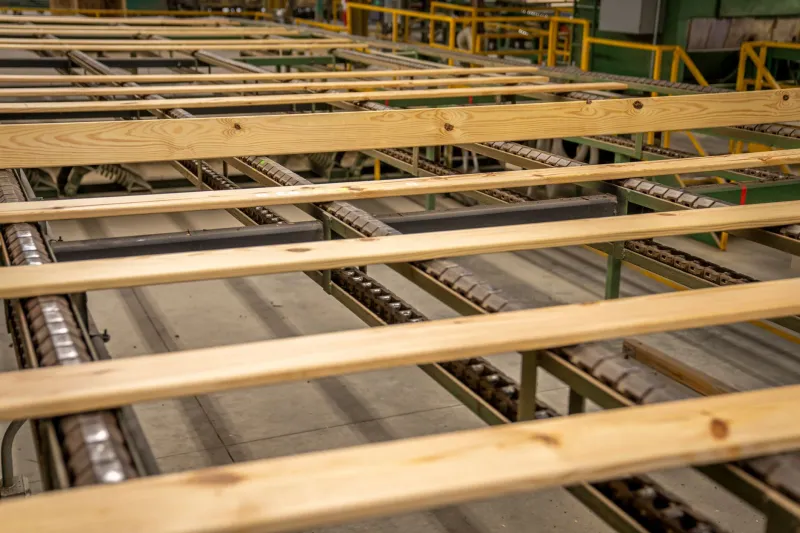
On the mill floor, automation investments in log sorting, grading, and material handling reduce the headcount required for a given production volume while also improving consistency and reducing injury rates. The capital requirements are significant, but enterprises evaluating these investments should model them against the fully loaded cost of the labor they displace — including recruitment costs, training time, and the production losses associated with turnover — rather than against the bare wage rate alone.
Rethinking Compensation Architecture
For the skilled positions where labor market competition is most acute, the structure of compensation may matter as much as its level. Equipment operators and mill technicians in rural markets are often weighing not just the hourly rate but the total employment proposition — schedule predictability, housing accessibility, healthcare quality, and career advancement visibility.
Enterprises that have moved toward annual salary structures for key equipment operators, replacing the variable-hours hourly model with guaranteed income and benefit packages more commonly associated with professional employment, have reported improved retention outcomes in several regional markets. The cost differential is real but frequently overstated; the turnover and retraining costs associated with the hourly model are chronic and poorly tracked in most operations' accounting.
Career laddering — creating explicit advancement pathways from entry-level equipment operation to crew lead to operations management roles — addresses the advancement visibility problem that causes talented young workers to view timber employment as a ceiling rather than a foundation. Communicating those pathways at the recruitment stage, not after hire, changes the candidate pool an enterprise can access.
The Strategic Imperative
Enterprise operators who have built sophisticated approaches to timber supply, market positioning, and capital allocation need to apply the same rigor to workforce planning. The labor shortage in US timber is not a cyclical disruption that will resolve when macroeconomic conditions shift. It is a structural condition with demographic, educational, and geographic roots that will persist and likely intensify over the coming decade.
The companies that emerge from this period with operational capacity intact will be those that began treating workforce development as a core strategic function — with dedicated resources, long planning horizons, and the willingness to make upstream investments whose payoff is measured in years rather than quarters. The window for proactive positioning is open. It will not remain so indefinitely.