Wood Waste or Working Capital? How Timber Enterprises Are Rethinking Biomass as a Revenue Engine

For decades, the accounting logic was straightforward: wood residuals are a cost of doing business. Bark, sawdust, chips, hog fuel, logging slash — these materials flow off the production floor and out of the ledger as quickly as possible. Hauling fees, tipping charges, and landfill contracts have long represented the quiet, accepted tax on timber processing. But the economics underlying that assumption have shifted materially, and operators who have not revisited their biomass strategy are now subsidizing a revenue gap they do not need to carry.
The emergence of structured biomass-to-energy markets, combined with evolving renewable energy credit (REC) frameworks at the state and federal level, has created a genuine arbitrage opportunity — one that a minority of US timber enterprises are capturing while the majority continue paying to dispose of materials that have measurable market value.
The Scale of What Is Being Left Behind
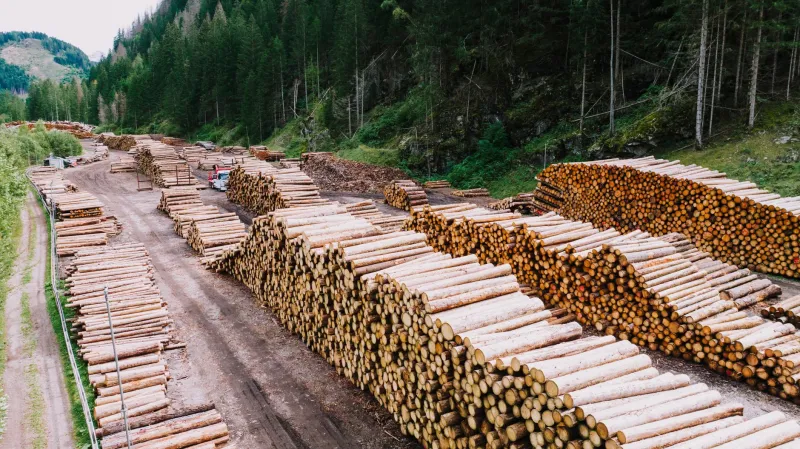
The US Forest Service estimates that domestic timber harvesting and processing operations generate tens of millions of dry tons of woody biomass annually. A significant share of that volume either decomposes in the field, is burned in open piles where regulations permit, or is transported to disposal facilities at the operator's expense. The implicit assumption embedded in that practice is that the material has no better use. That assumption is increasingly incorrect.
Biomass energy facilities — ranging from combined heat and power (CHP) installations to dedicated biomass power plants — are active buyers in multiple US regions. In the Pacific Northwest, the Southeast, and portions of the Great Lakes states, contracted biomass feedstock arrangements are generating delivered prices that range from $20 to $60 per dry ton depending on moisture content, species mix, and proximity to the end user. For a mid-size sawmill generating 80,000 dry tons of residuals annually, the difference between a disposal cost and a contracted sale can represent several million dollars in annual operating margin.
Renewable Energy Credits and the Secondary Revenue Layer
Beyond the direct sale of biomass feedstock, operators who invest in on-site energy generation infrastructure can access a second, often underappreciated revenue stream: renewable energy credits. Under most state REC programs and certain federal incentive structures, electricity generated from qualified woody biomass qualifies as renewable generation. Each megawatt-hour produced can yield a tradeable credit that carries independent market value.
REC prices vary considerably by state program, compliance vintage, and market conditions, but in states with active renewable portfolio standards — including California, Massachusetts, New York, and Oregon — biomass-derived RECs have traded at prices that materially improve the economics of on-site generation projects. When stacked against avoided disposal costs and reduced grid electricity purchases, the combined financial case for biomass energy infrastructure can reach internal rates of return that justify serious capital consideration.
Some operators have taken this logic further by pursuing qualification under the federal Investment Tax Credit (ITC) or Production Tax Credit (PTC) for biomass energy systems, adding another layer of financial return that shortens payback periods and strengthens project economics.
Why Most Operators Have Not Made the Move
If the economics are this compelling, why does the arbitrage persist? The answer lies in a combination of organizational inertia, capital allocation complexity, and information asymmetry.
First, biomass monetization requires cross-functional coordination that most timber enterprises are not structured to execute. The CFO sees a capital expenditure request. The operations director sees an unfamiliar technology. The procurement team sees a new category of counterparty relationships. Without a clear internal champion and a structured business case, these projects stall in committee.
Second, the regulatory and contractual landscape for biomass energy markets is genuinely complex. State-level REC program eligibility rules differ meaningfully. Feedstock quality specifications from energy buyers require operational discipline around sorting, moisture management, and storage. Negotiating long-term offtake agreements demands a level of commercial sophistication that many family-owned and mid-market operators have not needed to develop for their core timber business.
Third, and perhaps most consequentially, the opportunity cost calculation is invisible in most standard timber enterprise accounting. Disposal costs appear as a line item. Foregone biomass revenue does not appear anywhere. Decision-makers are systematically underestimating the value of inaction because their financial reporting is not structured to surface it.
What Forward-Thinking Operators Are Doing Differently
The enterprises capturing this value are not necessarily the largest players in the industry. Several mid-size operators in the US Southeast and Pacific Northwest have built profitable biomass revenue programs by following a disciplined three-stage approach.
The first stage is a rigorous biomass inventory and characterization exercise — understanding precisely what residual volumes are being generated, at what moisture and species profiles, and at what points in the production process. This data forms the foundation of any credible market engagement.
The second stage is market mapping: identifying which biomass energy facilities operate within economically viable haul distances, what their feedstock specifications require, and what contract structures they are willing to offer. In regions with active biomass energy infrastructure, this market intelligence often reveals contracted opportunities that did not require capital investment in generation assets — simply a reliable feedstock supply agreement.
The third stage, for operators with sufficient volume and strategic appetite, is evaluating on-site energy generation. CHP systems that convert biomass to both heat and electricity can dramatically reduce a mill's energy costs while generating REC revenue. The capital requirement is real, but so is the long-term operating margin improvement.
The Window for First-Mover Advantage
Biomass energy markets, like most emerging commodity markets, reward early entrants. Operators who establish feedstock supply relationships and, where appropriate, generation infrastructure now will benefit from preferential contract terms and established buyer relationships before competition for feedstock intensifies. In regions where biomass energy capacity is actively expanding — driven in part by state renewable energy mandates and corporate sustainability commitments from industrial energy buyers — that competitive dynamic is already tightening.
For CFOs and operations directors conducting capital allocation reviews, the biomass question deserves a position on the agenda it has not historically received. The materials are already being produced. The markets exist. The regulatory frameworks, while complex, are navigable. What has been missing, in most cases, is the organizational decision to treat wood energy byproducts as the revenue-generating assets they have become rather than the disposal liabilities they once were.
The arbitrage will not remain this wide indefinitely. The operators moving now are not taking a speculative position — they are correcting a valuation error that has been embedded in timber enterprise accounting for too long.