Pressure Points: How US Timber Enterprises Can Fortify Their Supply Chains Against Cascading Disruptions
When Multiple Pressures Arrive Simultaneously
Supply chain risk management has always occupied a corner of the timber enterprise playbook, but it rarely commanded the urgency it does today. The disruptions that once arrived sequentially—a port labor dispute here, a tariff adjustment there—are now materializing in overlapping waves. For US timber exporters and domestic distributors alike, 2024 has underscored a fundamental vulnerability: supply chains engineered for efficiency in stable conditions are poorly equipped to absorb simultaneous, cross-sector shocks.
The stakes are significant. Lumber and engineered wood products move through a complex web of mills, rail corridors, trucking networks, and marine terminals before reaching end buyers. A delay or cost spike at any single node can compress margins across the entire chain. Understanding where those nodes are most exposed—and what structural changes can reduce that exposure—is now a core competency for enterprise operations and logistics leadership.
Port Congestion: Patterns, Causes, and Downstream Effects
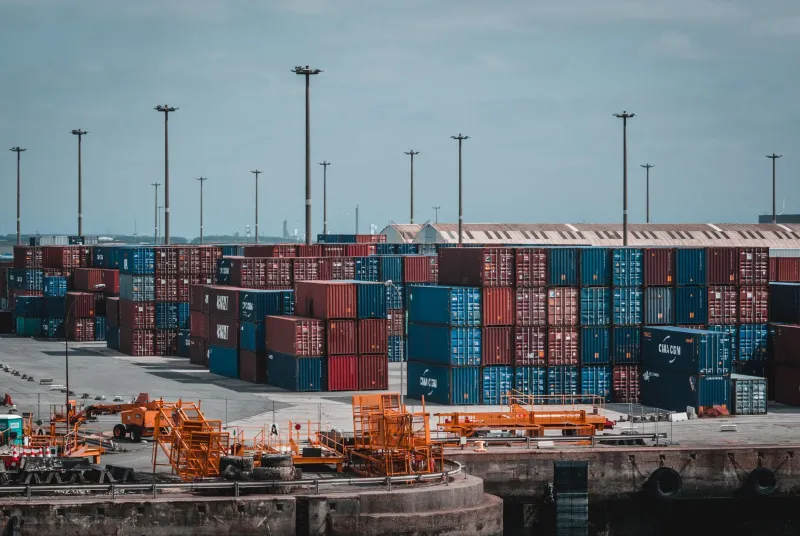
US port performance has been a persistent variable in timber export economics. West Coast ports, historically the primary gateway for softwood lumber and log exports to Asian markets, have experienced recurring congestion driven by a combination of vessel bunching, chassis shortages, and labor contract uncertainty. The 2023 contract negotiations between the International Longshore and Warehouse Union (ILWU) and the Pacific Maritime Association (PMA) produced a prolonged period of work slowdowns that created booking backlogs lasting well into the following year at ports including Los Angeles, Long Beach, and Tacoma.
East Coast and Gulf Coast terminals, which handle a growing share of hardwood lumber and panel product exports to European and Middle Eastern buyers, have faced their own congestion dynamics—driven in part by the Panama Canal drought restrictions of late 2023, which rerouted vessel traffic and compressed berth availability at ports from Savannah to Houston. For timber shippers, these disruptions translate directly into demurrage charges, missed delivery windows, and strained customer relationships.
The operational response most consistently deployed by resilient shippers has been port diversification. Rather than routing all export volume through a single preferred terminal, enterprises are distributing cargo across multiple ports based on real-time congestion data and carrier availability. This approach increases logistical complexity but significantly reduces the impact of any single port's performance degradation. Several major softwood exporters in the Pacific Northwest have formalized this strategy by establishing standing relationships with both West Coast and Gulf Coast freight forwarders, maintaining the flexibility to reroute shipments within a 72-hour window.
Workforce Availability: The Mill and Logistics Labor Gap
The labor dimension of supply chain vulnerability is less visible than port congestion but arguably more structurally entrenched. US sawmills and wood processing facilities have struggled with workforce availability for several years, a challenge rooted in an aging production workforce, competition from other manufacturing sectors, and geographic concentration of facilities in rural labor markets with limited population growth.
Bureau of Labor Statistics data consistently shows that wood products manufacturing carries one of the higher quit rates among goods-producing industries, reflecting both the physical demands of mill work and the availability of alternative employment in tight regional labor markets. For enterprise operators running multiple facilities, this translates into chronic understaffing on certain shifts, reduced throughput capacity, and elevated overtime costs that erode unit margins.
The logistics side of the equation presents parallel challenges. Truck driver availability for lumber hauls—particularly for the regional short-haul routes that connect mills to distribution yards and reload centers—has remained constrained despite modestly improved conditions in the broader freight market. Owner-operators who exited the market during the 2022–2023 freight recession have not fully returned, and the specialized flatbed and step-deck capacity required for structural lumber transport remains tighter than dry van capacity in most regions.
Enterprises addressing this gap are pursuing a dual strategy: investing in workforce development partnerships with community colleges and vocational programs in mill communities, while simultaneously accelerating automation investments that reduce headcount requirements for routine production tasks. Neither approach delivers immediate relief, but both reduce long-term structural exposure to labor market volatility.
Tariff Uncertainty and International Competitiveness
No analysis of US timber supply chain risk is complete without addressing the tariff environment, which has been in a state of managed uncertainty for several years. The softwood lumber dispute with Canada—a decades-long trade friction governed by the Softwood Lumber Agreement—continues to generate countervailing and antidumping duties that fluctuate with periodic administrative reviews. Current combined duty rates on Canadian softwood imports have ranged from the mid-single digits to above 20 percent depending on the producer and review cycle, creating meaningful price floor support for domestic producers but also introducing cost volatility for US buyers who blend domestic and imported supply.
Beyond the Canada dispute, broader Section 301 tariff architecture affecting Chinese wood product imports—including certain plywood, engineered flooring, and cabinet components—continues to reshape sourcing patterns for US distributors and manufacturers. Companies that built supply chains around Chinese-sourced panel products have been forced to qualify alternative suppliers in Southeast Asia and Eastern Europe, a process that typically requires 12 to 18 months of supplier development and quality validation.
For US timber exporters, the concern runs in the opposite direction: retaliatory tariffs imposed by trading partners in response to US trade actions have periodically disrupted log and lumber flows to key Asian markets. Enterprise export managers tracking these dynamics increasingly maintain contingency allocation plans that shift volume between markets based on prevailing duty structures, allowing the business to respond to tariff changes within a single shipping cycle rather than over multiple quarters.
Building Redundancy Into the Enterprise Supply Chain
The common thread connecting the most resilient timber supply chain operations is a deliberate investment in redundancy—not as a cost to be minimized, but as a strategic asset that preserves optionality under stress. Practically, this means maintaining relationships with multiple carriers rather than consolidating all volume with a single preferred provider for rate leverage. It means holding modest safety stock at strategically located distribution points rather than operating on pure just-in-time inventory disciplines. And it means investing in supply chain visibility technology—track-and-trace platforms, port congestion dashboards, and carrier performance analytics—that allows logistics teams to identify emerging bottlenecks before they become costly delays.
Scenario planning has also become a more formalized discipline at leading timber enterprises. Operations and finance teams are conducting structured exercises that model the revenue and margin impact of specific disruption events—a 30-day port closure, a 10-point tariff increase on a key export market, a 15-percent reduction in available truck capacity—and pre-determining the response protocols that would be activated in each scenario. This preparation reduces decision latency when disruptions materialize and ensures that the enterprise's response is coordinated across commercial, operations, and finance functions.
The timber industry has always operated within the rhythms of nature and the volatility of commodity markets. The supply chain challenges of the current environment are, in that sense, consistent with a long tradition of managing uncertainty. What has changed is the simultaneity and interconnectedness of the pressures—and the competitive advantage available to enterprises that treat supply chain resilience as a strategic priority rather than a reactive necessity.